Strategies in Boxing

Once it’s time to compete, whether in the gym or in a tournament, you’re bound to get into trouble at any time. It is common for people to begin to doubt themselves in a first great defeat. You will begin to wonder if boxing really is for you. Or maybe you feel like you’ve reached a plateau and can not improve. Here are some essential boxing punching guides to help you to overcome the mental challenges.
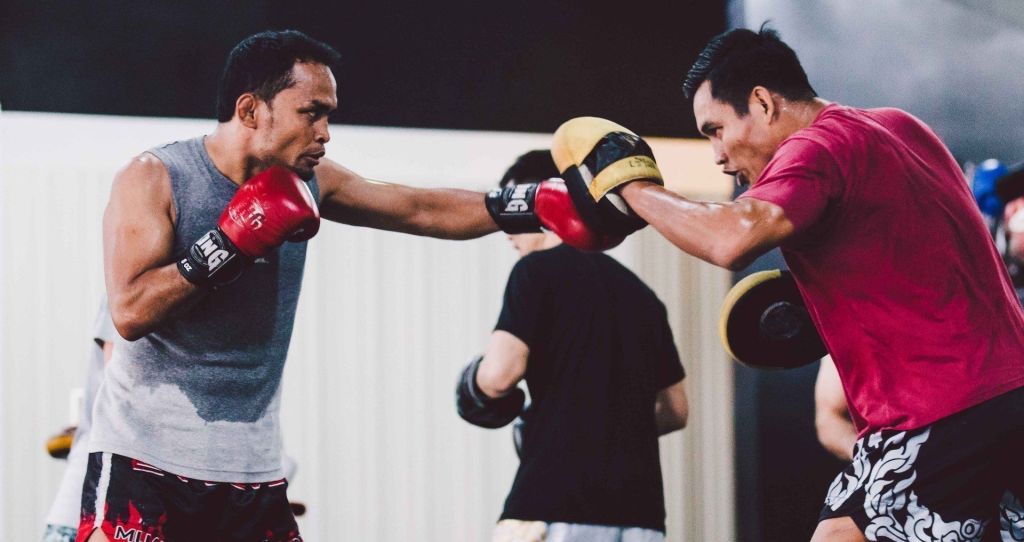
best boxing body protector and best mma
sparring

Boxing Styles

A lot of people ask me:

1.) What is the best style for boxing?

2.) How can I fight like Mike Tyson?

3.) What style should I use to fight boxing?

Okay, listen, this is hard to explain, but I’ll do my best. The business is as follows, there really are no such things as “fighting style” or even “the best style”. The only style that really matters is YOUR NATURAL STYLE. Which means that you should make things the most natural and easy for you. In fact, you do not even have to think about style. Just keep improving your technique, training and strategy in boxing over time – and your “style” will be a result of that. What matters is that you win, not as you seem.

And the best choice is the one with which you are most comfortable. A tall guy might find it easier to fight out loud. A low guy may find it easier to fight low. Mike Tyson fights as he fights because it’s the easiest way for him. He throws heavy blows because he is already a strong guy, he did not need extra effort to BE strong.

Muhammad Ali dances around the ring because he has a great leg work. If you want to do that, you have to do your leg work to the point where it’s easy. Otherwise, trying to be Ali when you do not have your skills or physical conditioning will just be loss of energy. All the best fighters you see have their own styles because they have found the easiest way for THEMSELVES to succeed. And you will have to find the EASIEST (and not the fastest) way for YOU to succeed.

Of course, this does not mean that your style will never change. This is absurd. Your physical and mental abilities will change over time and with that your style. Your style will continue to evolve as new moves and new approaches to fighting become more natural to you. But this will only happen if you focus on yourself rather than trying to copy other people. It is good to find inspiration in other people, BUT FOCUS ON YOURSELF!

Sparring

I really hope you know what you’re doing or at least be training with someone who knows what you’re doing. Sparring can quickly become a dangerous thing for untrained people. There are lots of fun videos on YouTube with people doing backyard fights … and then when you do it, the worst happens – you break your nose, or you have a bruise, injury or even die. These things really do happen. Go slow and train until you reach maximum speed, this is the only sure way to learn something.

Exercises For Sparring

It is important that you train and evolve until you have contact with a complete sparring partner, especially if you are a beginner without help. Take it easy, slow down. If you’re hurting, it’s because you’re going too fast. If one of you is retreating, it is because you are going too fast. I recommend first getting a shadow fight between you (mime, non-contact), then start with jabs before you cast all the blows possible. It’s also a great idea to fight two-minute rounds early on. If getting tired fast does not mean you’re bad, it’s a natural thing that happens to many fighters, especially if they’re not accustomed to fighting pressure.

Sparring Tips

  • Wear safety equipment (mouth guard, head protector, etc.).
  • Fight with someone who will help you LEARN how to fight better (and not just hit you).
  • Do not fight anyone who is TRYING to hurt you (wait until you are more trained).
  • You owe nothing to your instructor, do not let him force you into dangerous situations.
  • HANDS UP, LOOK AT YOUR OPPONENT, BREATHE.
  • Do not cast more than 3-5 strokes at a time.
  • You will ALWAYS get tired, you better get tired beating than defending.
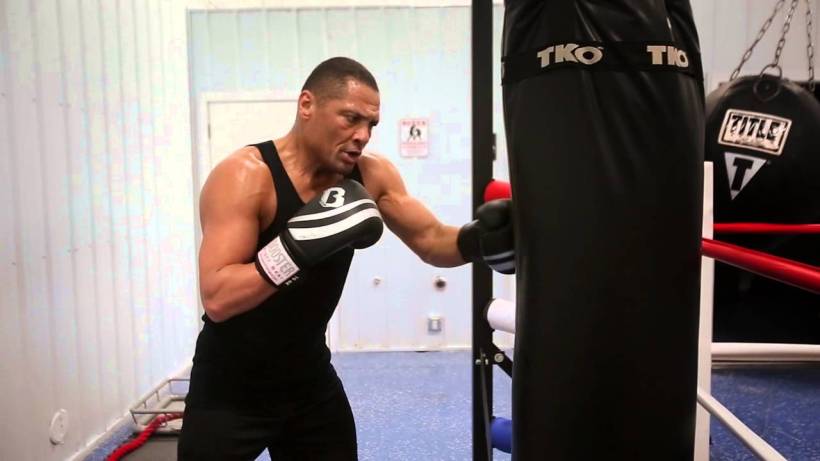
Basic Punching Combos in Boxing

Advanced Technique of Punching combinations

    • Start from a relaxed position
    • Exhale when casting
    • Tension your fist and your muscles at the moment of impact
    • Release your hand back to you

Throwing punches is simply the act of being relaxed, so quickly hasten your hand toward the target and exhale quickly. You tense your fist at the moment of impact and then relax your hand to take more hits. The trick is to use the weight of your entire body on your stroke without losing your balance. Skill and experience will teach you over time.

For a beginner, the most important thing is to learn the proper way to strike. In the future, you will be able to cast many different varieties of punches from different positions and will develop your own punching technique that will fit into your style.

This is all just a matter of learning the correct way to throw punches. There are many ways to learn.

We are going to do our best here and there are also other places to check out if you want to learn more about the sport of boxing. Our top boxing blog we would recommend would be Smartmma.com, they tend to do a pretty good job at being centered around beginners to boxing and mixed martial arts. Read below to find out our tips and then go check them out if you want to learn more and get to the top of your mma and boxing game.

punching combinations

Basic Punching Tips

    • Rotate your entire body and pivot with your foot on ALL THE BEATS, EXCEPT THE JAB.
    • Keep your posture and balance for greater strength and better mobility.
    • Make sure that the hand that is not striking is defending the other side of your body.
    • Exhale quickly on all strokes.
    • All boxing punches are basically a variation of straight punches (elbows extended), crossed (elbows on the side) or uppercut (elbows down).

Straight from the Left (JAB) – the # 1 most important weapon in boxing

    • Keep the rest of your body still, extend your left fist directly forward.
    • Exhale sharply as you strike by rotating your fist to stop the palm of your hand down.
    • Pull your hand back immediately after impact to defend.

*** Try throwing a jab with a step forward (aka “jab with pitch”). Also try a jab on the body flexing slightly your knees and your waist as you strike.

The jab is boxing’s most important blow. With it you can attack, defend, counterattack, score points, measure distances and many other things. It is your longest and fastest blow, uses less energy and leaves you little vulnerable. A boxing trainer will usually tell you that every combo should start with a jab. It is a quick blow that disorients your opponent enough to hit heavier blows.

Watch the boxing video below to learn more about these punching combos

Straight from Right (DIRECT) – your strongest blow

    • Rotate your hip and upper body counterclockwise as you rotate your right foot (about 90 degrees).
    • Exhale quickly as you extend your right fist straight forward from your chin.
    • Rotating the fist to reach the target with the palm of the hand down.
    • Do not let your head over your front knee.

*** When necessary, your elbow can be flexed to create a slight overhand or even a big to divert you from your opponent’s guard. Many boxing instructors emphasize the importance of a straightforward right to beginners because the latter telegraphs less and does not leave the fighter so vulnerable. It is unusual to see a “right crusader” because he will probably be blocked by his opponent’s left shoulder. Flex your knees and your waist if you want to throw a straight into the body.

The direct will naturally become your most powerful blow because it comes from your dominant hand and gains power from your back with ease. When combined, jab and straight are known as the basic yet incredibly useful 1-2 combination.

LEFT CROSS – a powerful and dangerous blow

    • Rotate your foot clockwise (about 90 degrees) as you lower your right heel and lift your left heel.
    • Your body rotates like a solid block as you turn your foot.
    • The left arm is tensioned so your left fist is thrown to the target.

*** For a left crusader on the body, leave your left hand down and toss with your fist vertically.

The left crusader is easily one of boxing’s deadliest blows. He protrudes from a side angle, making it difficult to defend when an opponent is expecting a direct hit. It is also common for knockouts because the blow turns the head and leaves the opponent stunned with ease. You can cast left crusaders on the head with your fist horizontally or vertically; for a beginner, I recommend that you use those with which you feel most comfortable.

Left-wing crusaders in the body are the most common means of attacking the body. The “stroke in the liver” (located below the ribs) is known to be extremely painful and leads to many knockout strokes on the body. Bumps on the body usually leave you breathless and end up with your legs, making it harder to move. A well-fitting blow to the body can temporarily paralyze your legs and knock you down even if you are still conscious and willing to fight.

LEFT UPPERCUT – dangerous blow for short and long distance

    • Rotate your foot clockwise (about 90 degrees) as you lower your right heel and lift your left heel.
    • Your body rotates like a left crusader (do not lean forward or backward).
    • With your elbow pointing down, lightly lower your left fist and toss it up as you exhale.
    • The blow hits with the palm facing up.
    • Keep this bump compact and regain your position quickly.

*** You can cast that blow more directly or more curved, on the head or the body.

The left uppercut is a great blow to use over short or even medium distances. It’s stronger than the jab, it’s fast, and it can be quite unexpected. The only risk is that you need to be close to your opponent and your right shoulder is not lifting to defend your opponent’s right.

UPPERCUT RIGHT – dangerous blow at short and long range

    • Rotate your hip and upper body counterclockwise as you turn your right foot (about 90 degrees).
    • Your body rotates like a right crusader (do not lean forward or backward).
    • With your elbow pointing down, lightly lower your right fist and toss it up as you exhale.
    • The blow hits with the palm facing up.
    • Keep this bump compact and regain your position quickly.

The right uppercut is a devastating blow to be used over short or medium distances. It is too powerful to be thrown into the head or body. The great risk is that you are lowering your right hand and exposing yourself to a counterattack with a left crusader.