Basic Strategies of Struggle in Boxing & Extreme Martial Arts

Every beginner should start at least with this basic strategy of struggle. You can use this in a difficult sparring or even a fight. The goal is to score a few points without being completely exposed. You can go very far if you do it right.

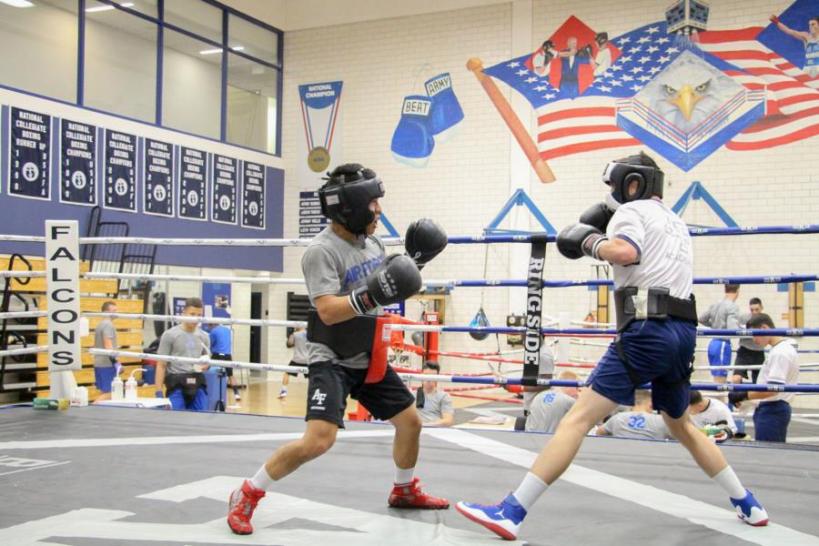
1st Round: Initially move around and try to touch the opponent. See how it moves and see where it is exposed. Learn about it and hit it without wasting too much energy. Save your energy for the next rounds.

2nd Round: You must have picked up the pace of his move. Begin to cast heavier blows, and counter-attack without being reckless. Keep your back off the ropes and remember to strike or else you will end up like a punching bag.

3rd Round: go yet. Throw your best hits, as many as you can. Be aggressive but not unwise. It’s the last round, so fight as hard as you can. Empty your tank before the bell rings.
best boxing body protector
professional boxer and mma fighter

Basic Fight Styles

These are basic ideas for fighting with different types of opponents. It is not a complete guide at all. Anyway, you will have to improve your conditioning and technique to improve your fighting skills. As your boxing skills improve, your ability to deal with different types of opponents will also improve. And yet, there will always be someone who will invalidate your style.

Strength Fighter – Use a good defense or move a lot. The goal is to dodge your punches without using more energy than he. You will need to tire him so he can attack you whenever his blows do not hurt much.

Fast Steps – Attack quick opponents like you do with a punching ball, not a punching bag. This means using quick blows and not powerful blows. Use many, many quick punches and you’ll eventually pick him up. Once you’ve got it, you can try stronger punches.

Defensive Shell – Throw a lot of punches and you will break your defense. Try to stand next to or behind him before attacking, do not stand in front of him as you will be hit by a counterattack. Wait, do not be in a hurry since he’s not pitching anything.

Aggressive “Swarmer” – These guys are always a nightmare for all the beginners. You do not have time to think, so all you can do is hit back and pray that you do not get tired before him. Be smart and look with good punches. Approach him to leave you with no room for blows or use a solid guard to block many of his blows. Be sure to strike back at least to keep fighting or else you will end up as a punching bag. A good example of this type of guy would be Conor McGregor

High or long range – Go forward and with high guard throw some strong right overhands. Try to swap punches and see if you can beat him by fatigue. The goal is to gain distance without being hit or using too much energy.

Little faces or dodgers – if you can not hit your head, look at your body and work your way up. A good idea is to aim at the chest and force it to lock there, and then go to the head or the stomach.
Boxing Academy and Martial Arts Coaches

The quickest way to learn is to take classes with someone who knows what you are doing. The people and the environment that surrounds it has a great effect on its growth. Training with better trainers and fighters will increase your ability quickly. Training alone or with fighters with lower levels will slow your progress. That said, going to a gym and training with an instructor is the best option. It will be difficult, scary and out of your comfort zone, but this will make you a better fighter!

Partner

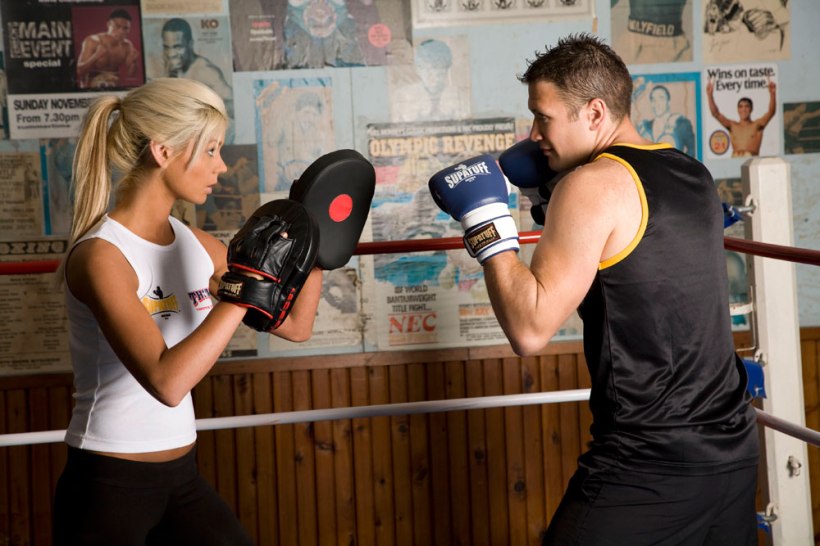
A partner can hold gloves for you, sparring with you, running with you, training with you, motivating you and pushing you beyond your limits. Boxing, like any other sport, is a lot more fun when practiced with other people. Training boxing without a partner is the same as learning to play chess alone. You will imagine all sorts of irrelevant possibilities only to lose later when you finally face a real opponent. If you do not want to stay in time, have a partner and you can progress exponentially.

Punching Bag

For a beginner, you will need a punching bag to develop the shape, strength, speed, and endurance of the hit. It will probably be a lot of fun for you at first because you never had the chance to exercise all your energy that way. Eventually you will switch to bigger and better things, but for a beginner the punching bag promotes a lot of fun.

best punching bags

Ball Ceiling-Soil

An incredible method to develop accuracy, reaction time and speed of hands. I highly recommend this item as a complement or even a substitute for the punching bag, especially by experienced boxers.

Jumping Rope

For $ 10.00 you will not get a better boxing equipment that will help you to develop your conditioning, balance, leg work and even punching ability. The jump rope is a very common method among boxers to warm, exercise or lengthen.

Punching Bag

Great for developing rhythm, reaction time, accuracy, speed of hands and resistance in the arms. A punching ball is absolutely crucial for serious boxers but is not really necessary for recreation. If you have access to one, great.

You can practice boxing fights anywhere but a boxing ring is best if you want to learn how to box according to common rules and boxing structures. Having a ring helps limit the area, so neither you nor your opponent can run out of range. It also forces you to develop not only long-distance skills but also short-range skills. On a more psychological level, fighting in a ring forces you to face your opponent without the option of giving up.

Basic Boxing Training

Below is a general idea about basic boxing training. It may be easy for athletes, but quite difficult for other people. Do what you can and work to improve. If something seems difficult to do, then you will know that you need to do it more often. If something is hurting, STOP. Last but not least, REST. Do not be inconsequential and train until you are completely sore and bruised. No intelligent athlete does anything like that, just newbies (because they do not know how to be productive unless they get completely exhausted).

Heating

  • 3 ROUNDS – run or jump rope (do both is great too) [like jumping rope]
  • 3 ROUNDS – shadow [how to make shadow]
  • stretch and keep moving around to warm up the body [like warming your arms]

Boxing Training

  • 3 ROUNDS – focus gloves with coach / partner (to develop new skills)
  • 3 ROUNDS – punch bag
  • 3 ROUNDS – punching ball
  • 3 ROUNDS – single-roof
  • 3 ROUNDS – more shadow (to reinforce new acquired skills and warm up for sparring)
  • 3 ROUNDS – sparring.
  • 3 ROUNDS – conditioning work, can be plyometrics, tabata exercises, resistance training, calisthenics, etc.

Finishing

  • 100 arm flexions
  • 100 sit ups
  • 100 squats
  • stretch again to not get so sore or caught the next day

Tips for Boxing Workout:

Ask everyone for tips. It’s amazing how you can learn when you seek suggestions from different angles of vision – there is more than one way of doing things, you must learn all of them (there is no “the best way”).

Eat right. This will give you more energy and speed your recovery.